THE FLEETI BLOG
Fuel management in Africa: how can you spot your fleet’s invisible losses?
Diversion, excessive idling and aggressive driving: how these fuel losses escape the controls of African fleets and how to make them measurable.

Co-founder and Managing Director
Last updated
AT A GLANCE
The topic: the invisible fuel losses of African transport, construction and agribusiness fleets, and how to make them measurable using data.
The figures: in a fleet without sensors, 15 to 25% of the fuel declared does not correspond to any productive use. Idling can account for 10 to 15% of total consumption, and an aggressive driver can use 15 to 25% more than a colleague on the same route. Fleeti clients see an average 20% drop in their fuel budget within 90 days.
The 3 causes: diversion at refuelling (jerrycans, inflated receipts, litres handed over), excessive idling with the engine running while stationary, and aggressive driving. Without sensors, these losses appear neither in fuel vouchers nor in reports.
With Fleeti: Fleeti, the SaaS fleet management and telematics software founded in 2020, cross-references the level measured in the tank, GPS journeys and refuelling to flag every discrepancy. More than 1,000 clients use it, supported by local teams in 7 countries across France and Africa.
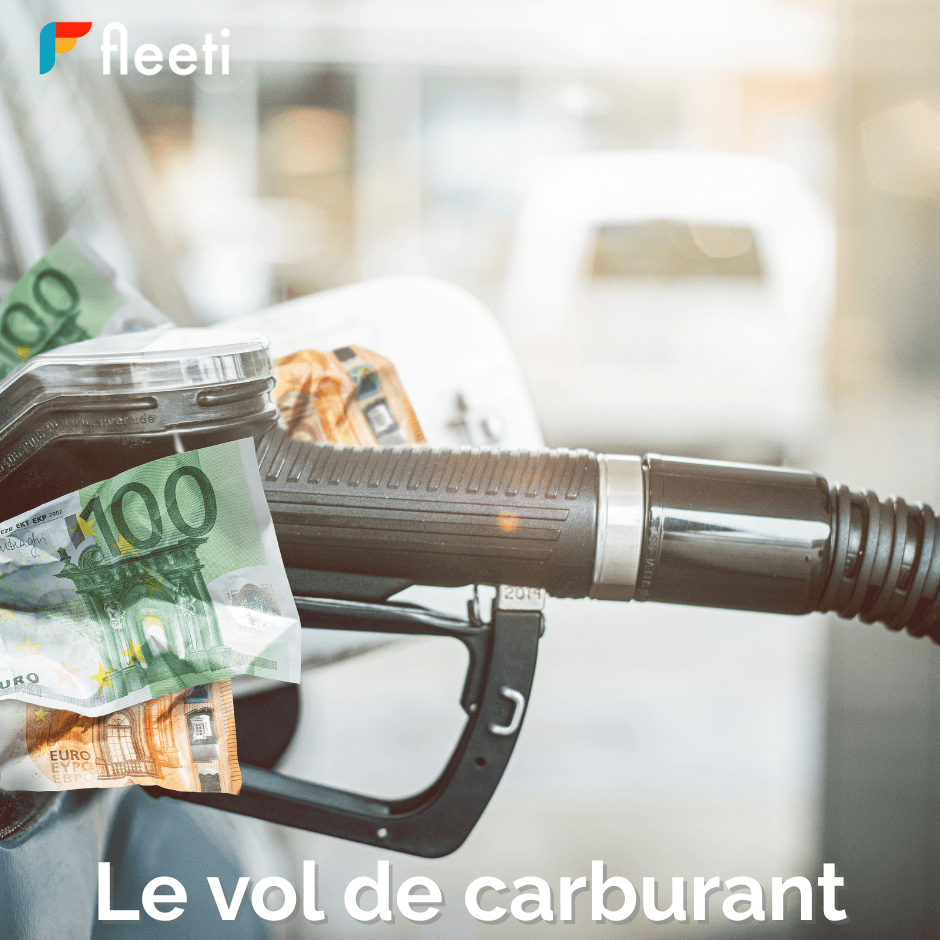
In Africa, fuel management is a major issue for transport and logistics fleets, agribusiness fleets and construction fleets: fuel weighs heavily on their budgets. Yet part of it disappears every month without a trace, through three habits: diversion at refuelling, excessive idling and aggressive driving.
This guide details these fuel losses, explains why they escape conventional controls and shows how data-driven management finally makes them measurable.
Why does a fleet lose fuel without realising it?
A fleet loses fuel without realising it because the losses do not come from spectacular theft, but from small daily leaks: a refuel declared a little too generously, an engine left running during a break, a driving style that uses 20% more fuel on every journey. On their own, they go unnoticed.
Added together, these leaks weigh heavily on the fuel budget. This is neither burglary nor scandal: the problem is not a lack of rigour on the part of the teams, it is a lack of visibility over what is really happening in the tanks.
What share of an African fleet’s fuel is actually lost?
In a fleet without sensors, between 15 and 25% of the fuel declared does not correspond to any real productive use. These litres have not moved a single vehicle, run a single machine or delivered a single consignment. It is a reality across transport, construction and agribusiness throughout Africa.
In a fleet of 30 vehicles, this loss does not show up as a suspicious line in a report. Yet it represents several million CFA francs vanishing every month, with no visible anomaly and without anyone having a reason to ask questions.
No one notices it as it happens: not the finance director, not the fleet manager, not the accountant who approves the invoices. The figures look consistent, the drivers come back on time, the trucks keep rolling.
The real danger, then, is not the loss you can see, but the one you are not even looking for.
Which habits drain a fleet’s fuel budget?
Three habits drain a fleet’s fuel budget: fuel diversion, excessive idling and aggressive driving. On paper, everything looks normal: refuelling is done and the reports look the same from one month to the next. Yet these deeply rooted practices consume fuel without anyone having to pick a lock or falsify a document. Diversion is detailed below; excessive idling and aggressive driving each have their own dedicated section.
How does fuel diversion take hold in a fleet?
Diversion starts small, almost by chance. An isolated act gradually becomes part of daily routine, until it turns into an accepted practice, without any sense of guilt. It often takes one of these forms:
a driver takes advantage of a company refuelling stop to quietly fill up a personal jerrycan;
a petrol station receipt is slightly inflated;
a few litres are handed over to a colleague or a relative, as if it were perfectly normal.
These practices leave almost no trace in conventional systems. They require neither complicity nor sophisticated equipment: a lack of control is enough.
Some fleet managers discover, after deploying a fuel monitoring system, that the problem had been going on for years. Not through negligence, but because they did not have the necessary tools and trusted their teams.
Why is fuel diversion so hard to detect?
A fuel voucher can be falsified and a mileage reading rounded off: these control methods have had their day. What changes the game is the combination of a level sensor in the tank and real-time GPS data. You no longer compare declarations; you compare facts.
To go further, see our action plan against fuel theft in an African fleet.
How much does excessive idling cost a fleet?
Excessive idling, in other words an engine running while the vehicle is stationary, can on its own account for 10 to 15% of total consumption in some fleets. It is not theft: no one is at fault, but comfort habits send fuel up in smoke, day after day.
Three examples of losses that could have been avoided:
a truck waiting outside a warehouse with its engine running, because it is 38 degrees and the air conditioning is on;
a construction machine left running during the break, because “it takes time to restart”;
a vehicle parked outside an office with its engine running, while the driver waits inside.
These behaviours are often seen as normal, even reasonable, by those who adopt them. Without data, they remain invisible and impossible to correct. For machinery, our guide on the actual consumption of construction machinery details this phenomenon.
How can you put a figure on the impact of idling on your budget?
To put a figure on the impact of idling, multiply daily idling time by hourly fuel consumption at idle, the number of vehicles and the number of working days, then by the local price per litre. For example, assuming 2 litres per hour: 2 hours of idling per day × 2 L/h × 30 vehicles × 22 working days = 2,640 litres a month burned without covering a single kilometre. This is not an accident, but a habit that no one has ever had the means to measure.
Why does aggressive driving push fuel consumption up?
A driver with an aggressive style can use 15 to 25% more fuel than a colleague driving the same route in the same vehicle. Harsh acceleration, late braking and unnecessary revving all add up. Across an entire fleet, the difference becomes huge and can cost more than diversion.
There is no ill intent here either, just reflexes ingrained over years. No one has ever challenged them, for lack of data to do so. This is not a discipline problem but a mirror problem: most drivers would change their habits if they could see their real impact.
How can you take concrete action on driving behaviour?
Not with sanctions, but with data. Identifying the most fuel-hungry drivers, showing them their figures through eco-driving monitoring per driver, then supporting them with targeted training: this is the approach that delivers lasting results. Fleets that have adopted it see rapid gains that hold over time.
How does Fleeti make fuel losses visible?
Fleeti makes fuel losses visible by cross-referencing three sources in real time: the level measured in the tank by an on-board IoT sensor, GPS journeys and recorded refuelling. Discrepancies show up immediately, where they used to go unnoticed. Fleeti is not a surveillance tool, but a system that makes visible what was not.
To stop siphoning, the sensors read the fuel level directly in the tank, independently of what the dashboard gauge shows or what the driver declares. These measurements feed into fuel monitoring by level sensor, which matches every change in the tank to a journey or a refuelling.
What does fuel monitoring change day to day?
an alert on your phone as soon as a refuel does not match the level detected;
a monthly report showing, vehicle by vehicle, what was consumed, where and how;
monitoring of driving behaviour, so you can act on habits and not just on figures;
an overall view that turns fuel from an expense you endure into a lever you control.
No more grey areas and practices deemed “normal” that are in fact abuses: discrepancies become quantified, qualified and actionable facts from day one.
What results can you expect in the first 90 days?
Fleeti clients see an average 20% reduction in their fuel budget in the first three months after roll-out. This result requires neither a complete overhaul of the organisation nor six months of intensive training: the losses were already there, they simply had to be seen and measured.
How can you estimate your fleet’s fuel losses?
To estimate your fleet’s fuel losses, you need to start from your vehicles, your industry and your reality on the ground, not from a generic figure. An initial estimate rests on three comparisons: litres purchased compared with the litres theoretically needed for the kilometres or engine hours completed, idling time recorded per vehicle, and differences in consumption between drivers on comparable journeys. Without a sensor, these calculations remain approximate; with a level sensor and GPS, they become measurable vehicle by vehicle.
Every fleet has its own leaks, its own habits and its own room for improvement. That is why Fleeti, present in 7 countries with local teams in Senegal, Côte d’Ivoire, Burkina Faso, Morocco, Tanzania, Mauritius and France, analyses your situation before proposing anything.
Fuel is just one of the cost items to link to actual use: our guide to optimising fleet costs in Africa with data presents the other levers.
Book your free demo and see in concrete terms what you could recover every month.
How can you spot fuel losses in a fleet in Africa?
Fuel losses in a fleet in Africa come mainly from three habits: diversion at refuelling, excessive idling with the engine running while stationary, and aggressive driving. They remain invisible in vouchers and readings. To spot them, you need to cross-reference a level sensor in the tank with GPS journeys and recorded refuelling.