
Business eco-driving: measure, train, protect
Business eco-driving: measure, train, protect
Business eco-driving: measure, train, protect
Fleeti is eco-driving software for businesses that continuously scores each driver on four indicators weighted by road type. You protect your drivers, identify costly behaviour and measure the drop in accidents, fuel consumption and CO2 emissions in under six months.
Fleeti is eco-driving software for businesses that continuously scores each driver on four indicators weighted by road type. You protect your drivers, identify costly behaviour and measure the drop in accidents, fuel consumption and CO2 emissions in under six months.
Book a demo

Business eco-driving: measure, train, protect
Fleeti is eco-driving software for businesses that continuously scores each driver on four indicators weighted by road type. You protect your drivers, identify costly behaviour and measure the drop in accidents, fuel consumption and CO2 emissions in under six months.
Book a demo
Workplace road safety: reduce your fleet's accident rate
Workplace road safety: reduce your fleet's accident rate
Workplace road safety: reduce your fleet's accident rate
Fleets that set up a measurable eco-driving programme see up to 50% fewer emergency braking events and 23% fewer harsh starts in the first twelve months. Fleeti continuously detects the risky behaviours that lead to accidents : speeding, insufficient following distance, repeated emergency braking.
Fleets that set up a measurable eco-driving programme see up to 50% fewer emergency braking events and 23% fewer harsh starts in the first twelve months. Fleeti continuously detects the risky behaviours that lead to accidents : speeding, insufficient following distance, repeated emergency braking.
You meet your employer obligations on road risk, the leading cause of work-related deaths in France, and document your prevention approach in your mandatory risk assessment document (DUERP).
You meet your employer obligations on road risk, the leading cause of work-related deaths in France, and document your prevention approach in your mandatory risk assessment document (DUERP).
Financially, you renegotiate your fleet insurance premium on an objective claims history while reducing the excesses you pay and the downtime caused by vehicles off the road.
Financially, you renegotiate your fleet insurance premium on an objective claims history while reducing the excesses you pay and the downtime caused by vehicles off the road.
Save up to 15% on fuel
Save up to 15% on fuel
Save up to 15% on fuel
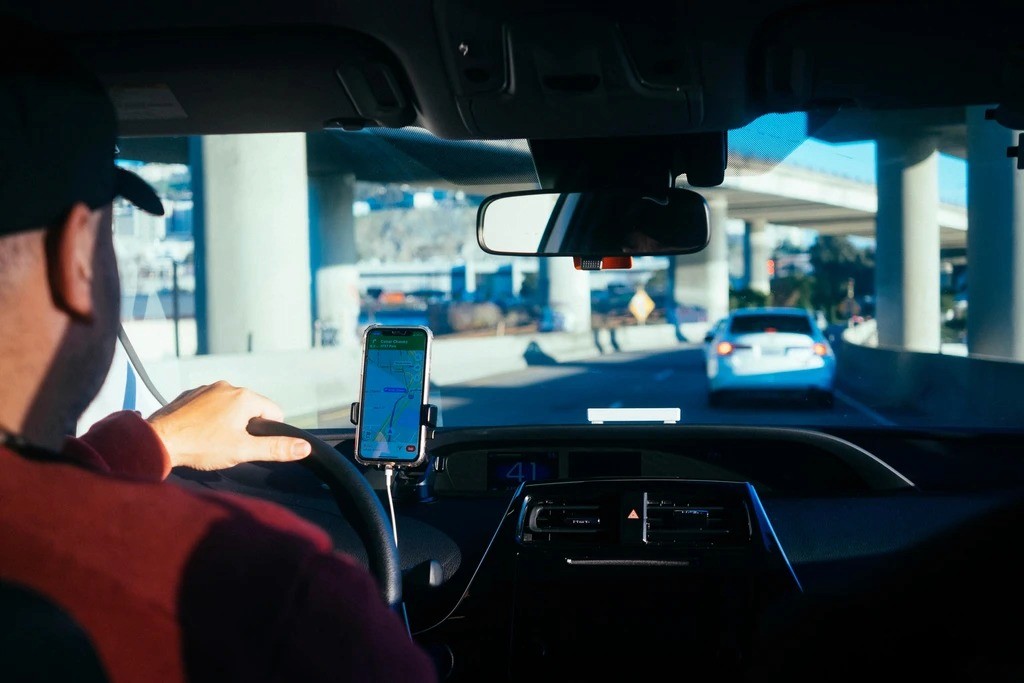
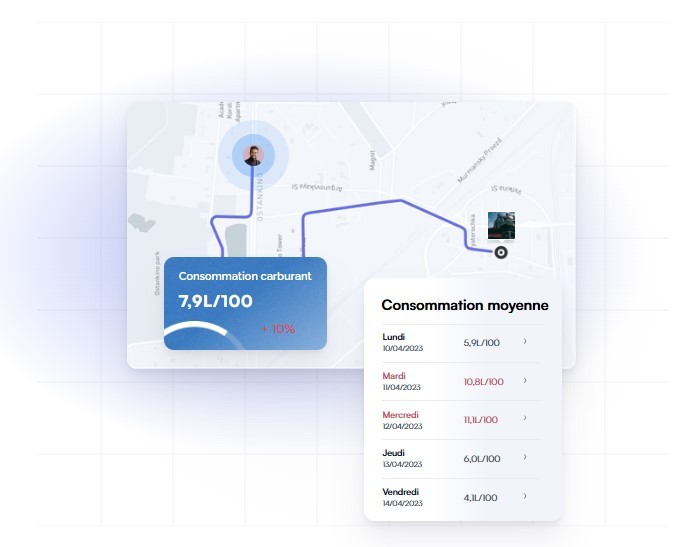
Eco-driving cuts fuel consumption by 10 to 15% on average across a business fleet, according to ADEME (French Agency for Ecological Transition). Fleeti continuously measures costly behaviour using data collected via the vehicle's CAN bus or OBD port: harsh acceleration, excessive idling, speeding and high engine revs.
Eco-driving cuts fuel consumption by 10 to 15% on average across a business fleet, according to ADEME (French Agency for Ecological Transition). Fleeti continuously measures costly behaviour using data collected via the vehicle's CAN bus or OBD port: harsh acceleration, excessive idling, speeding and high engine revs.
You identify high-consumption vehicles, target the drivers to train first, and measure the gains to the litre on your fleet's driver TCO.
You identify high-consumption vehicles, target the drivers to train first, and measure the gains to the litre on your fleet's driver TCO.
On a fleet of 100 diesel vehicles, a 12% reduction means more than €40,000 of diesel saved each year at current market prices.
On a fleet of 100 diesel vehicles, a 12% reduction means more than €40,000 of diesel saved each year at current market prices.
Engage your drivers without monitoring them
Engage your drivers without monitoring them
Engage your drivers without monitoring them
Fleeti scoring strictly follows the framework set by the CNIL (French data protection authority) for on-board telematics: no continuous individual monitoring, anonymised rankings by default, a privacy mode drivers can switch on, and personal access to their own data.
Fleeti scoring strictly follows the framework set by the CNIL (French data protection authority) for on-board telematics: no continuous individual monitoring, anonymised rankings by default, a privacy mode drivers can switch on, and personal access to their own data.
Each driver sees their progress in the Fleeti mobile app, receives discreet in-cab tips and takes part in team challenges by crew, site or branch.
Each driver sees their progress in the Fleeti mobile app, receives discreet in-cab tips and takes part in team challenges by crew, site or branch.
Where constant audible alarms cause pushback, gamification motivates without singling anyone out. You win lasting buy-in from field teams and their employee representatives.
Where constant audible alarms cause pushback, gamification motivates without singling anyone out. You win lasting buy-in from field teams and their employee representatives.
Feed your CSRD reporting with auditable data
Feed your CSRD reporting with auditable data
Feed your CSRD reporting with auditable data
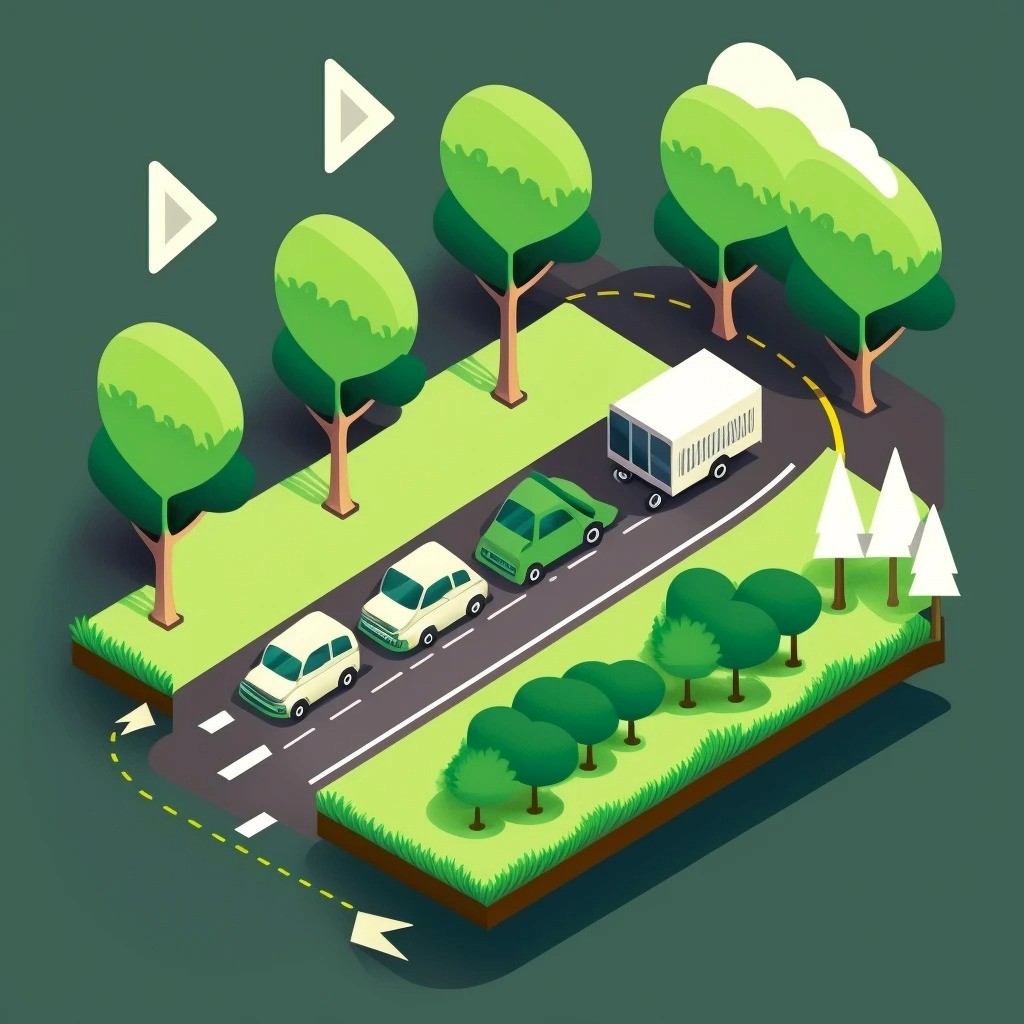
Smoother driving means 12% lower CO2 emissions per vehicle per year on average. Fleeti automatically calculates your fleet's Scope 1 emissions using an auditable method and exports them directly to your CSRD reporting, in a format compatible with your ESG assessment software.
Smoother driving means 12% lower CO2 emissions per vehicle per year on average. Fleeti automatically calculates your fleet's Scope 1 emissions using an auditable method and exports them directly to your CSRD reporting, in a format compatible with your ESG assessment software.
The breakdown by vehicle, site and fuel type lets your CSR team document its decarbonisation pathway for stakeholders.
The breakdown by vehicle, site and fuel type lets your CSR team document its decarbonisation pathway for stakeholders.
Eco-driving becomes a measurable ESG indicator rather than a statement of good intentions.
Eco-driving becomes a measurable ESG indicator rather than a statement of good intentions.
Book a demo
Key figures for business eco-driving
Key figures for business eco-driving
Key figures for business eco-driving

15%
15%
fuel savings achievable by adopting eco-driving practices.
73%
73%
73%
of employees who took eco-driving training significantly improved their driving.
30%
30%
30%
reduction in maintenance costs is possible after introducing eco-driving practices.
25%
25%
25%
reduction in road accidents involving company vehicles.
Continuous measurement
Continuous measurement
Continuous measurement
Driver score calculated on every trip from four indicators: acceleration, braking, speed and cornering. Automatic weighting by road type (urban, rural, motorway).
Driver score calculated on every trip from four indicators: acceleration, braking, speed and cornering. Automatic weighting by road type (urban, rural, motorway).
Driver score calculated on every trip from four indicators: acceleration, braking, speed and cornering. Automatic weighting by road type (urban, rural, motorway).
Clear colour coding
Clear colour coding
Clear colour coding
Score out of 100, shown in red, orange or green. The fleet manager sees at a glance which drivers need support and which deserve recognition. Anonymised ranking available.
Score out of 100, shown in red, orange or green. The fleet manager sees at a glance which drivers need support and which deserve recognition. Anonymised ranking available.
Score out of 100, shown in red, orange or green. The fleet manager sees at a glance which drivers need support and which deserve recognition. Anonymised ranking available.
Targeted coaching
Targeted coaching
Targeted coaching
Individual training plan generated from measured gaps. Short modules, in-cab micro-coaching through the driver app, and progress tracking over time.
Individual training plan generated from measured gaps. Short modules, in-cab micro-coaching through the driver app, and progress tracking over time.
Individual training plan generated from measured gaps. Short modules, in-cab micro-coaching through the driver app, and progress tracking over time.
Measured ROI
Measured ROI
Measured ROI
Automatic calculation of fuel savings and accident trends, compared with the previous month and the fleet average. Indicators exportable to your reporting.
Automatic calculation of fuel savings and accident trends, compared with the previous month and the fleet average. Indicators exportable to your reporting.
Automatic calculation of fuel savings and accident trends, compared with the previous month and the fleet average. Indicators exportable to your reporting.
How Fleeti calculates the eco-driving score
The Fleeti eco-driving score is a mark out of 100, calculated continuously from four driving indicators measured by the on-board telematics device or OEM manufacturer data: acceleration, braking, speed and cornering. Each indicator is weighted by road type, so urban drivers and long-distance drivers are compared fairly.
01
01
Driving data collection
Driving data collection
Driving data collection
The Fleeti telematics device, or the OEM manufacturer API directly, continuously measures speed, engine revs, acceleration, braking, cornering and idling. Nothing is self-reported; everything is measured.
The Fleeti telematics device, or the OEM manufacturer API directly, continuously measures speed, engine revs, acceleration, braking, cornering and idling. Nothing is self-reported; everything is measured.
The Fleeti telematics device, or the OEM manufacturer API directly, continuously measures speed, engine revs, acceleration, braking, cornering and idling. Nothing is self-reported; everything is measured.
02
02
Context weighting
Context weighting
Context weighting
Each driving event is assessed in context: road type (urban, rural, motorway), speed at the time of the event and vehicle load. Braking in town does not carry the same weight as braking on a motorway.
Each driving event is assessed in context: road type (urban, rural, motorway), speed at the time of the event and vehicle load. Braking in town does not carry the same weight as braking on a motorway.
Each driving event is assessed in context: road type (urban, rural, motorway), speed at the time of the event and vehicle load. Braking in town does not carry the same weight as braking on a motorway.
03
03
Score out of 100
Score out of 100
Score out of 100
The weighted indicators produce an overall score per trip and an average score per driver, vehicle, site or team. The score is colour-coded: green above 80, orange between 50 and 80, red below.
The weighted indicators produce an overall score per trip and an average score per driver, vehicle, site or team. The score is colour-coded: green above 80, orange between 50 and 80, red below.
The weighted indicators produce an overall score per trip and an average score per driver, vehicle, site or team. The score is colour-coded: green above 80, orange between 50 and 80, red below.
04
04
Driver and manager reporting
Driver and manager reporting
Driver and manager reporting
The fleet manager sees rankings and trends in the dashboard. Drivers access their personal score and areas for improvement in the Fleeti mobile app, without involving their manager.
The fleet manager sees rankings and trends in the dashboard. Drivers access their personal score and areas for improvement in the Fleeti mobile app, without involving their manager.
The fleet manager sees rankings and trends in the dashboard. Drivers access their personal score and areas for improvement in the Fleeti mobile app, without involving their manager.
Launch a measurable eco-driving programme
An effective business eco-driving programme has three successive phases: measure a baseline before any training, build team momentum through challenges and targeted coaching, then continuously track ROI on fuel savings, accidents and avoided emissions. Fleeti automates all three phases from a single interface.
01 - Measure the baseline
01 - Measure the baseline
01 - Measure the baseline
Over the first thirty days, Fleeti measures each driver's current score before any training. You get an objective snapshot: average fleet score, at-risk drivers, most exposed sites, excess fuel cost and baseline accident rate.
Over the first thirty days, Fleeti measures each driver's current score before any training. You get an objective snapshot: average fleet score, at-risk drivers, most exposed sites, excess fuel cost and baseline accident rate.
Over the first thirty days, Fleeti measures each driver's current score before any training. You get an objective snapshot: average fleet score, at-risk drivers, most exposed sites, excess fuel cost and baseline accident rate.
Objective diagnosis before any action
Objective diagnosis before any action
Objective diagnosis before any action
02 - Engage and coach
02 - Engage and coach
02 - Engage and coach
Each driver receives discreet real-time notifications in the Fleeti app about behaviour to correct. You then launch challenges by team, site or branch: anonymised rankings, monthly challenges and recognition for the biggest improvements.
Each driver receives discreet real-time notifications in the Fleeti app about behaviour to correct. You then launch challenges by team, site or branch: anonymised rankings, monthly challenges and recognition for the biggest improvements.
Each driver receives discreet real-time notifications in the Fleeti app about behaviour to correct. You then launch challenges by team, site or branch: anonymised rankings, monthly challenges and recognition for the biggest improvements.
Individual coaching and team challenges
Individual coaching and team challenges
Individual coaching and team challenges
03 - Track ROI continuously
03 - Track ROI continuously
03 - Track ROI continuously
Automatic dashboard: cumulative fuel savings, accident trends, CO2 emissions avoided, progress in average score. You run your programme with the same indicators as your finance department.
Automatic dashboard: cumulative fuel savings, accident trends, CO2 emissions avoided, progress in average score. You run your programme with the same indicators as your finance department.
Automatic dashboard: cumulative fuel savings, accident trends, CO2 emissions avoided, progress in average score. You run your programme with the same indicators as your finance department.
Fuel, accident and CO2 reporting
Fuel, accident and CO2 reporting
Fuel, accident and CO2 reporting
Fleeti eco-driving by industry
Fleeti deploys its eco-driving module across every type of business fleet: maintenance and home service companies, carriers and logistics providers, passenger transport operators, short and long-term rental companies, and many more.
Field services
Field services
A maintenance company with 200 vehicles in France deploys the Fleeti eco-driving score and runs team challenges by branch. Accidents go down, fuel consumption too, and the fleet insurance premium is renegotiated on objective data.
A maintenance company with 200 vehicles in France deploys the Fleeti eco-driving score and runs team challenges by branch. Accidents go down, fuel consumption too, and the fleet insurance premium is renegotiated on objective data.
France · Insurance premium renegotiation
France · Insurance premium renegotiation
Transport and logistics
Transport and logistics
A regional haulier activates Fleeti eco-driving across its entire truck fleet to improve safety. In-cab coaching and idling tracking reduce diesel consumption and feed directly into the client's CSRD reporting.
A regional haulier activates Fleeti eco-driving across its entire truck fleet to improve safety. In-cab coaching and idling tracking reduce diesel consumption and feed directly into the client's CSRD reporting.
France · Diesel savings and CSRD reporting
France · Diesel savings and CSRD reporting
Long and short-term rental
Long and short-term rental
A rental company with several hundred vehicles shares driver scores with its business customers to help them manage their TCO. Eco-driving becomes a distinctive value-added service and a measurable sales argument, in France and the Indian Ocean.
A rental company with several hundred vehicles shares driver scores with its business customers to help them manage their TCO. Eco-driving becomes a distinctive value-added service and a measurable sales argument, in France and the Indian Ocean.
France · Indian Ocean · Value-added service
France · Indian Ocean · Value-added service
Frequently asked questions about business eco-driving
Eco-driving delivers measurable financial results, not just good intentions. Within six months, you lower fuel use, accidents and emissions. Within twelve months, you renegotiate your fleet insurance premium on objective data. Fleeti gives you the tools to do it, without treating your drivers as suspects.
Eco-driving delivers measurable financial results, not just good intentions. Within six months, you lower fuel use, accidents and emissions. Within twelve months, you renegotiate your fleet insurance premium on objective data. Fleeti gives you the tools to do it, without treating your drivers as suspects.



IoT for the operations of African and European businesses.
© 2026 Fleeti SAS