
Fleet regulatory compliance: LOM, CSRD, ANTAI, benefits in kind
Fleet regulatory compliance: LOM, CSRD, ANTAI, benefits in kind
Fleet regulatory compliance: LOM, CSRD, ANTAI, benefits in kind
Cover the obligations that apply to your fleet in France on a single platform: LOM law, CSRD, ANTAI designation, benefits in kind and the annual incentive tax. A clear timeline, penalties anticipated, data ready for audit.
Cover the obligations that apply to your fleet in France on a single platform: LOM law, CSRD, ANTAI designation, benefits in kind and the annual incentive tax. A clear timeline, penalties anticipated, data ready for audit.
Book a demo

Fleet regulatory compliance: LOM, CSRD, ANTAI, benefits in kind
Cover the obligations that apply to your fleet in France on a single platform: LOM law, CSRD, ANTAI designation, benefits in kind and the annual incentive tax. A clear timeline, penalties anticipated, data ready for audit.
Book a demo
Why fleet compliance became a strategic issue in 2026
Why fleet compliance became a strategic issue in 2026
A French business fleet now faces five active legal fronts: the LOM law, CSRD, ANTAI, benefits in kind and the annual incentive tax (TAI). On a fleet of 200 combustion vehicles, non-compliance penalties and unoptimised tax can add up to more than €100,000 a year.
A French business fleet now faces five active legal fronts: the LOM law, CSRD, ANTAI, benefits in kind and the annual incentive tax (TAI). On a fleet of 200 combustion vehicles, non-compliance penalties and unoptimised tax can add up to more than €100,000 a year.
A French business fleet now faces five active legal fronts: the LOM law, CSRD, ANTAI, benefits in kind and the annual incentive tax (TAI). On a fleet of 200 combustion vehicles, non-compliance penalties and unoptimised tax can add up to more than €100,000 a year.
Regulatory pressure has accelerated since 2025: the TAI doubles in 2026 (€4,000 per missing vehicle), the decree of 25 February 2025 raised the flat-rate benefit in kind for combustion vehicles from 9% to 15%, and the Omnibus of 26 February 2026 raised CSRD thresholds without easing data quality requirements.
Regulatory pressure has accelerated since 2025: the TAI doubles in 2026 (€4,000 per missing vehicle), the decree of 25 February 2025 raised the flat-rate benefit in kind for combustion vehicles from 9% to 15%, and the Omnibus of 26 February 2026 raised CSRD thresholds without easing data quality requirements.
Regulatory pressure has accelerated since 2025: the TAI doubles in 2026 (€4,000 per missing vehicle), the decree of 25 February 2025 raised the flat-rate benefit in kind for combustion vehicles from 9% to 15%, and the Omnibus of 26 February 2026 raised CSRD thresholds without easing data quality requirements.
For a CFO, CSR department or legal team, the challenge is no longer understanding each text in isolation, but managing separate deadlines in parallel from the same data. Fleeti consolidates this data and sends it to the right places, in the right formats, at the right time.
For a CFO, CSR department or legal team, the challenge is no longer understanding each text in isolation, but managing separate deadlines in parallel from the same data. Fleeti consolidates this data and sends it to the right places, in the right formats, at the right time.


LOM law: manage fleet greening and anticipate the annual incentive tax
LOM law: manage fleet greening and anticipate the annual incentive tax
The LOM law requires fleets of more than 100 vehicles to reach a growing quota of low-emission vehicles. The annual incentive tax, in force since 1 March 2025, penalises any shortfall: €4,000 per missing vehicle in 2026 and €5,000 from 2027, capped at 1% of French turnover.
The LOM law requires fleets of more than 100 vehicles to reach a growing quota of low-emission vehicles. The annual incentive tax, in force since 1 March 2025, penalises any shortfall: €4,000 per missing vehicle in 2026 and €5,000 from 2027, capped at 1% of French turnover.
The low-emission quota for the whole fleet rises from 15% in 2025 to 18% in 2026 and 25% in 2027. The Climate and Resilience Law extends the pathway to 70% low-emission vehicles in replacements by 2030. A low-emission vehicle emits less than 50 g CO2/km under WLTP: fully electric, hydrogen or an eligible plug-in hybrid.
The low-emission quota for the whole fleet rises from 15% in 2025 to 18% in 2026 and 25% in 2027. The Climate and Resilience Law extends the pathway to 70% low-emission vehicles in replacements by 2030. A low-emission vehicle emits less than 50 g CO2/km under WLTP: fully electric, hydrogen or an eligible plug-in hybrid.
Three Fleeti levers: real-time tracking of the energy mix and quota gap, a vehicle-by-vehicle eligibility audit based on actual kilometres, and a costed TAI projection at 12 and 24 months to frame financial decisions. The TAI is declared on 1 March for the previous year, so your 2025 data must be ready by 1 March 2026.
Three Fleeti levers: real-time tracking of the energy mix and quota gap, a vehicle-by-vehicle eligibility audit based on actual kilometres, and a costed TAI projection at 12 and 24 months to frame financial decisions. The TAI is declared on 1 March for the previous year, so your 2025 data must be ready by 1 March 2026.
CSRD: produce the fleet reporting your auditors expect
CSRD: produce the fleet reporting your auditors expect
The CSRD requires large companies to publish auditable non-financial reporting, including the fleet's Scope 1 emissions (direct fuel combustion). Since the Omnibus of 26 February 2026, the threshold has risen to more than 1,000 employees and €450M in net turnover, but the ESRS E1 standard published by EFRAG still requires data quality.
The CSRD requires large companies to publish auditable non-financial reporting, including the fleet's Scope 1 emissions (direct fuel combustion). Since the Omnibus of 26 February 2026, the threshold has risen to more than 1,000 employees and €450M in net turnover, but the ESRS E1 standard published by EFRAG still requires data quality.
The method auditors recognise combines three elements per vehicle: certified annual mileage, type-approved or measured consumption, and a fuel emission factor (2.65 kg CO2/L for diesel, 2.28 kg CO2/L for petrol, ADEME Base Carbone). Compatible with Bilan Carbone® and the regulatory BEGES report for entities required to publish. Your auditors expect time-stamped, traceable mileage with history over several years: industry estimates are no longer acceptable.
The method auditors recognise combines three elements per vehicle: certified annual mileage, type-approved or measured consumption, and a fuel emission factor (2.65 kg CO2/L for diesel, 2.28 kg CO2/L for petrol, ADEME Base Carbone). Compatible with Bilan Carbone® and the regulatory BEGES report for entities required to publish. Your auditors expect time-stamped, traceable mileage with history over several years: industry estimates are no longer acceptable.
For companies no longer in scope after the Omnibus, the VSME standard recommended by the European Commission (30 July 2025) remains useful, particularly when a client subject to the CSRD requests your supplier data.
For companies no longer in scope after the Omnibus, the VSME standard recommended by the European Commission (30 July 2025) remains useful, particularly when a client subject to the CSRD requests your supplier data.

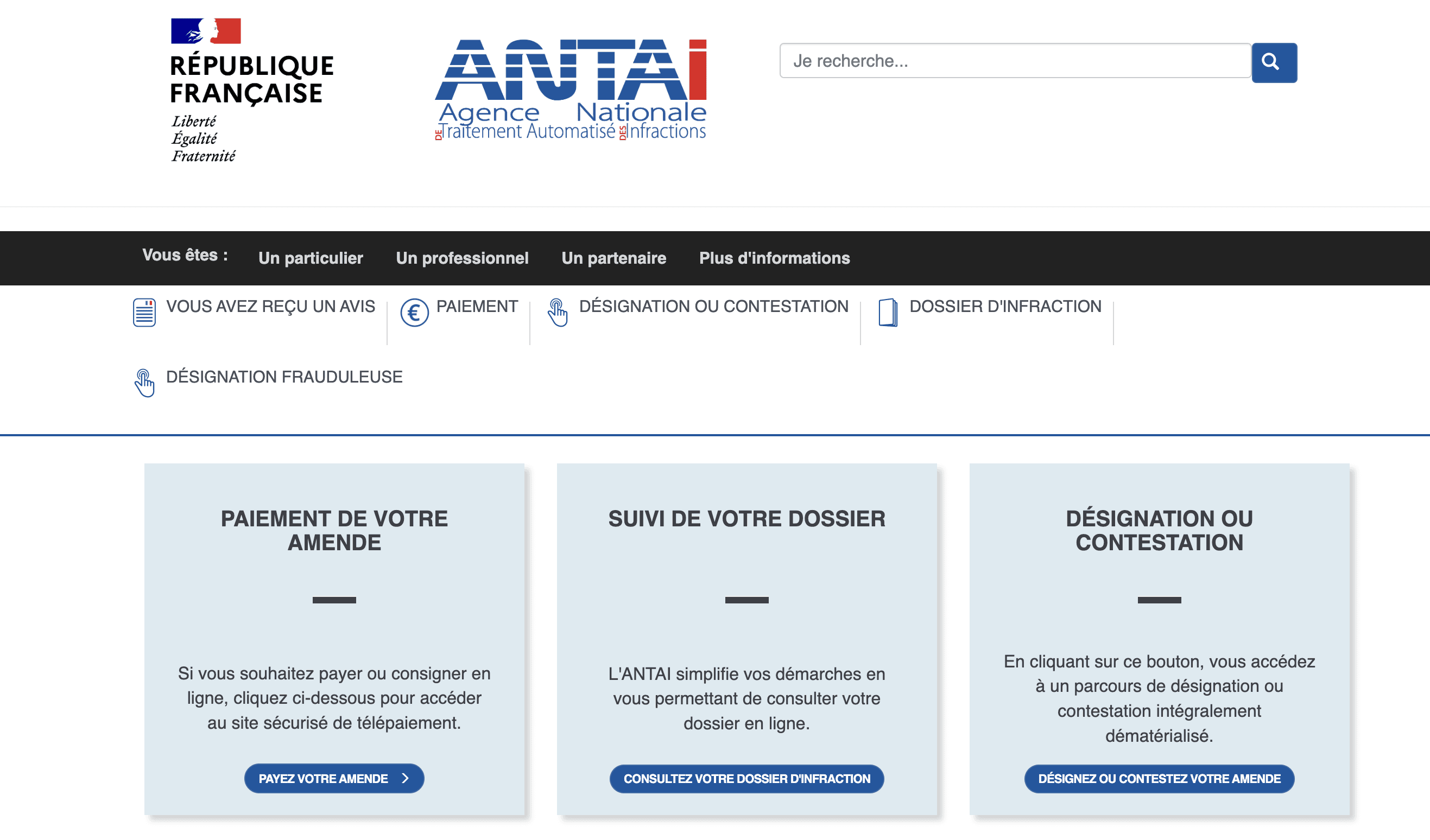
ANTAI: eliminate surcharges and secure driver designation
ANTAI: eliminate surcharges and secure driver designation
Article L121-6 of the French Highway Code gives a company's legal representative 45 days to designate the driver at fault. Otherwise, the increased fixed fine reaches €3,750 for the company and €750 for the legal representative personally.
Article L121-6 of the French Highway Code gives a company's legal representative 45 days to designate the driver at fault. Otherwise, the increased fixed fine reaches €3,750 for the company and €750 for the legal representative personally.
Handling a designation manually takes 10 to 15 minutes (receiving the letter, identifying the driver, finding the licence, completing the online form). For 200 vehicles with 3 fines per vehicle per year, that is 100 to 150 hours of work a year.
Handling a designation manually takes 10 to 15 minutes (receiving the letter, identifying the driver, finding the licence, completing the online form). For 200 vehicles with 3 fines per vehicle per year, that is 100 to 150 hours of work a year.
Fleeti connects directly to your ANTAI account (employer account, or API agreement above 1,000 vehicles) and cross-checks with the SIV (French vehicle register) to validate the registration before designation. The driver is identified by on-board telematics (RFID badge, Dallas key, usage-based identification) and the designation is sent in one click. Alerts 7 days before the deadline, time-stamped proof of submission, GDPR-compliant archiving.
Fleeti connects directly to your ANTAI account (employer account, or API agreement above 1,000 vehicles) and cross-checks with the SIV (French vehicle register) to validate the registration before designation. The driver is identified by on-board telematics (RFID badge, Dallas key, usage-based identification) and the designation is sent in one click. Alerts 7 days before the deadline, time-stamped proof of submission, GDPR-compliant archiving.
Benefits in kind and annual taxes: 2026 fleet tax without errors
Benefits in kind and annual taxes: 2026 fleet tax without errors
The decree of 25 February 2025 profoundly changed the flat-rate valuation of vehicle benefits in kind. For a recent owned combustion vehicle, the flat rate rises from 9% to 15% of the purchase price (20% with fuel), based on the new list price or the Autovista valuation for used vehicles. Fully electric vehicles eligible for the ADEME eco-score keep a 70% allowance, capped at €4,641.60 in 2026.
The decree of 25 February 2025 profoundly changed the flat-rate valuation of vehicle benefits in kind. For a recent owned combustion vehicle, the flat rate rises from 9% to 15% of the purchase price (20% with fuel), based on the new list price or the Autovista valuation for used vehicles. Fully electric vehicles eligible for the ADEME eco-score keep a 70% allowance, capped at €4,641.60 in 2026.
For each vehicle, you choose between flat rate and actual cost. Actual cost pays off when private use is low but requires rigorous business/personal mileage tracking. Without reliable data, the flat rate applies by default, often at a higher social cost.
For each vehicle, you choose between flat rate and actual cost. Actual cost pays off when private use is low but requires rigorous business/personal mileage tracking. Without reliable data, the flat rate applies by default, often at a higher social cost.
Fleeti calculates the benefit in kind at flat rate and actual cost from business/personal telematics mileage, suggests the more favourable method vehicle by vehicle and exports the entries to payroll or the DSN. For annual company vehicle taxes (formerly TVS), Fleeti applies the WLTP scale published by the tax authorities in the BOFiP and calculates pro rata to days of ownership.
Fleeti calculates the benefit in kind at flat rate and actual cost from business/personal telematics mileage, suggests the more favourable method vehicle by vehicle and exports the entries to payroll or the DSN. For annual company vehicle taxes (formerly TVS), Fleeti applies the WLTP scale published by the tax authorities in the BOFiP and calculates pro rata to days of ownership.

Book a demo
Coverage table: what the law requires and what Fleeti automates
Five legal obligations, one set of data. The table below summarises the thresholds, deadlines and penalties for each, and the Fleeti feature that handles it.
LOM law
LOM
Fleets of more than 100 vehicles. 18% low-emission quota in 2026. €4,000 penalty per missing vehicle. Fleeti tracks the energy mix in real time.
Incentive tax (TAI)
Annual incentive tax for fleets of more than 100 vehicles. Declared on 1 March 2026 for 2025. €4,000 per missing vehicle. Fleeti projects the TAI at 12 and 24 months.
CSRD
More than 1,000 employees AND €450M turnover (post-Omnibus). Report on the 2025 financial year. €75,000 and 5 years for serious offences. Fleeti delivers auditable Scope 1.
ANTAI
Any company with business vehicles. 45 days to designate. €3,750 penalty for the company. Fleeti designates in 1 click from the platform.
Benefit in kind (AEN)
Benefits in kind for any employee with a company vehicle. Applied with every payroll. Risk of URSSAF reassessment over 3 years. Fleeti calculates at flat rate and actual cost.
All these obligations share the same source data: mileage, powertrain, usage dates and driver assignment. Fleeti collects it automatically (on-board telematics or device-free OEM connection) and sends it to the right places in the right formats.
Fleet regulatory timeline: what lies ahead to 2030
The pathway is known up to 2030. Penalties rise, thresholds fall and electric vehicle advantages are gradually reduced. Use this timeline to plan ahead and manage your fleet without surprises.
2025
Entry into force
1 February: new benefit-in-kind decree (15% for combustion, 70% allowance for electric). 1 March: TAI at €2,000 per missing vehicle. LOM quota 15%. CSRD wave 1: first report published.
2026
A tougher year
1 January: CO2 penalty from 108 g/km, weight penalty from 1,500 kg. 1 March: TAI declaration for 2025, rate €4,000. LOM quota 18%. 26 February: the Omnibus raises CSRD thresholds to 1,000 employees and €450M turnover.
2027
Acceleration
TAI at €5,000 per missing vehicle. LOM quota: 25% low-emission vehicles. Favourable electric benefit-in-kind rules kept until 31 December. Allowance caps recalculated.
2028
CSRD expansion
CSRD wave 2: first reports published on the 2027 financial year (originally 2026, postponed by the Omnibus). The CS3D due diligence duty is gradually phased in.
2030
Final target
LOM quota: 70% low-emission vehicles in replacements (Climate and Resilience Law). Plan for the gradual end of electric vehicle tax advantages.
Fleet compliance with Fleeti, in figures
Fleet compliance with Fleeti, in figures
Fleet compliance with Fleeti, in figures

5
5
5
Number of obligations Fleeti handles: LOM, CSRD, ANTAI, benefits in kind and incentive tax, on a single platform
Number of obligations Fleeti handles: LOM, CSRD, ANTAI, benefits in kind and incentive tax, on a single platform
0
0
0
No surcharges, thanks to alerts ahead of the 45-day ANTAI designation deadline
No surcharges, thanks to alerts ahead of the 45-day ANTAI designation deadline
No surcharges, thanks to alerts ahead of the 45-day ANTAI designation deadline
+150 h
+150 h
+150 h
Saved per year on administration for 100 vehicles
Saved per year on administration for 100 vehicles
Saved per year on administration for 100 vehicles
A platform for every decision-maker involved
Fleet compliance involves several functions. Fleeti gives each one the views and exports it needs, from the same data.
Finance and management control
For a finance team managing 100 to 500 vehicles, Fleeti automates the TAI projection at 12 and 24 months, the flat-rate or actual-cost benefit-in-kind calculation per vehicle, and the accounting export to payroll or the DSN. Electrification decisions rest on figures, not intuition. Observed saving: 50 to 80 hours of work a year per 100 vehicles.
For a finance team managing 100 to 500 vehicles, Fleeti automates the TAI projection at 12 and 24 months, the flat-rate or actual-cost benefit-in-kind calculation per vehicle, and the accounting export to payroll or the DSN. Electrification decisions rest on figures, not intuition. Observed saving: 50 to 80 hours of work a year per 100 vehicles.
For a finance team managing 100 to 500 vehicles, Fleeti automates the TAI projection at 12 and 24 months, the flat-rate or actual-cost benefit-in-kind calculation per vehicle, and the accounting export to payroll or the DSN. Electrification decisions rest on figures, not intuition. Observed saving: 50 to 80 hours of work a year per 100 vehicles.
CSR and ESG
For a CSR department subject to the CSRD or voluntarily using VSME, Fleeti continuously calculates Scope 1 by vehicle, site and entity. You build a decarbonisation pathway aligned with SBTi (near-term 5-10 years, net zero 2050) and the ADEME Bilan Carbone® method, with annual milestones and alerts if you drift off course. Indicators are exported to your ESG platform (Greenly, Sami, Tennaxia, Toovalu) via API and are auditable with timestamps.
For a CSR department subject to the CSRD or voluntarily using VSME, Fleeti continuously calculates Scope 1 by vehicle, site and entity. You build a decarbonisation pathway aligned with SBTi (near-term 5-10 years, net zero 2050) and the ADEME Bilan Carbone® method, with annual milestones and alerts if you drift off course. Indicators are exported to your ESG platform (Greenly, Sami, Tennaxia, Toovalu) via API and are auditable with timestamps.
For a CSR department subject to the CSRD or voluntarily using VSME, Fleeti continuously calculates Scope 1 by vehicle, site and entity. You build a decarbonisation pathway aligned with SBTi (near-term 5-10 years, net zero 2050) and the ADEME Bilan Carbone® method, with annual milestones and alerts if you drift off course. Indicators are exported to your ESG platform (Greenly, Sami, Tennaxia, Toovalu) via API and are auditable with timestamps.
Legal and HR
For legal, HR and office management teams, Fleeti provides time-stamped proof of every ANTAI designation, archives driving licences with validity checks, keeps signed driver policies and ensures GDPR compliance (hosting in France, AES-256 encryption).
For legal, HR and office management teams, Fleeti provides time-stamped proof of every ANTAI designation, archives driving licences with validity checks, keeps signed driver policies and ensures GDPR compliance (hosting in France, AES-256 encryption).
For legal, HR and office management teams, Fleeti provides time-stamped proof of every ANTAI designation, archives driving licences with validity checks, keeps signed driver policies and ensures GDPR compliance (hosting in France, AES-256 encryption).
Tracking and driver data: built-in GDPR and CNIL compliance
Tracking and driver data: built-in GDPR and CNIL compliance
Tracking company vehicles is personal data processing governed by the GDPR and the CNIL. Fleeti supports it end to end: justified purpose, controlled retention period and drivers' rights protected.
Tracking company vehicles is personal data processing governed by the GDPR and the CNIL. Fleeti supports it end to end: justified purpose, controlled retention period and drivers' rights protected.
Company vehicle tracking falls under the GDPR and CNIL decision no. 2015-165 of 4 June 2015. Employers must justify an explicit purpose, inform each driver, generally limit location data retention to two months, and ensure tracking is switched off outside working hours. A CNIL penalty can reach 4% of global turnover.
Company vehicle tracking falls under the GDPR and CNIL decision no. 2015-165 of 4 June 2015. Employers must justify an explicit purpose, inform each driver, generally limit location data retention to two months, and ensure tracking is switched off outside working hours. A CNIL penalty can reach 4% of global turnover.
Fleeti hosts driver data in France with OVHcloud, applies AES-256 encryption in transit and at rest, segments access by role (finance, CSR, legal, HR, workshop) and logs every access.
Fleeti hosts driver data in France with OVHcloud, applies AES-256 encryption in transit and at rest, segments access by role (finance, CSR, legal, HR, workshop) and logs every access.
Day to day, Fleeti generates a pre-filled record of processing activities for the fleet, provides a driver policy template that can be signed online, offers a privacy mode outside working hours, and allows full export of a driver's data under article 20 of the GDPR.
Day to day, Fleeti generates a pre-filled record of processing activities for the fleet, provides a driver policy template that can be signed online, offers a privacy mode outside working hours, and allows full export of a driver's data under article 20 of the GDPR.
Frequently asked questions about fleet regulatory compliance
Take back control of your fleet's regulatory compliance. Fleeti consolidates the LOM law, CSRD, ANTAI designation, benefits in kind and the annual incentive tax on a single platform. A clear timeline, penalties anticipated, data ready for audit.
Take back control of your fleet's regulatory compliance. Fleeti consolidates the LOM law, CSRD, ANTAI designation, benefits in kind and the annual incentive tax on a single platform. A clear timeline, penalties anticipated, data ready for audit.



IoT for the operations of African and European businesses.
© 2026 Fleeti SAS