THE FLEETI BLOG
Fleet accident rate: how dashcams reduce accidents and insurance costs
How a smart dashcam like Fleeti Vision helps a company fleet prove its drivers were not at fault, prevent accidents and keep insurance premiums under control.

Co-founder and Chairman
Last updated
AT A GLANCE
The topic: how professional in-vehicle video helps a company fleet reduce its accident rate, vehicle downtime and insurance costs, serving both as evidence after an accident and as a road risk prevention tool.
Key points: video proves the driver was not at fault and speeds up claims handling, as in two not-at-fault accidents in Tanzania in November 2025; behavioural analysis detects more than 1,000 risky behaviours a day (harsh braking, phone use at the wheel, drowsiness) to target training; the benefits vary by industry (transport and logistics, construction and field services, multi-site fleets).
With Fleeti: Fleeti, the SaaS fleet management and telematics software founded in 2020, offers Fleeti Vision, a smart dashcam with inward- and outward-facing cameras, linked to the telematics data of its platform. More than 1,000 clients use it, supported by local teams in 7 countries across France and Africa.
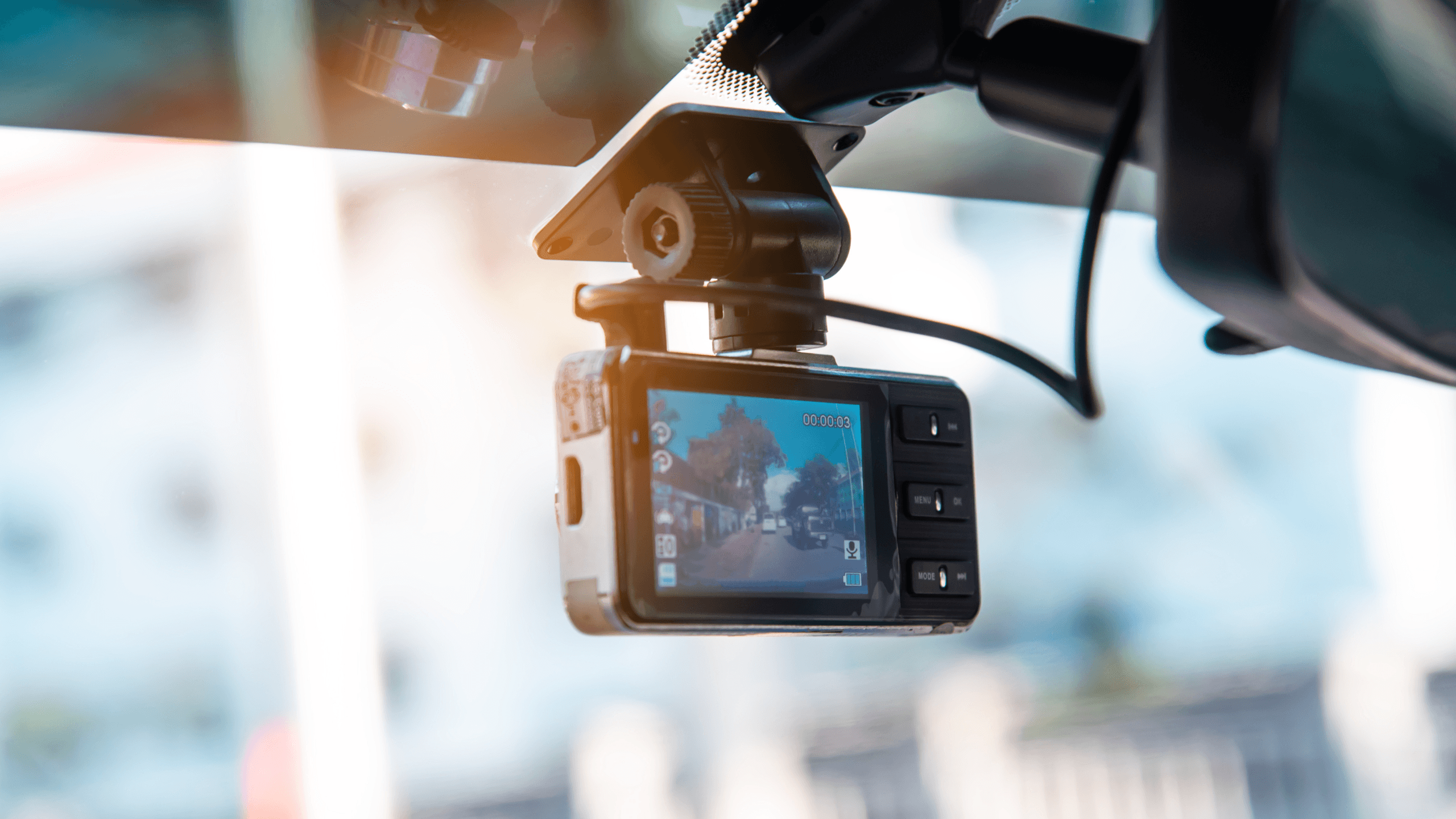
For a company that manages a fleet of vehicles, the accident rate is not just a human issue. For a fleet manager, every accident also has economic, legal and operational consequences. The in-vehicle camera is one of the most direct levers for reducing this risk.
Every accident leads to:
High repair costs;
Prolonged vehicle downtime;
Disruption to operations;
A gradual rise in insurance premiums;
Sometimes, lengthy and costly disputes.
Faced with these challenges, professional in-vehicle video, integrated into a telematics solution, has become a practical lever for reducing the fleet’s accident rate and keeping insurance costs under control.
Is an in-vehicle camera used to monitor drivers?
No, an in-vehicle camera solution for company fleets is first and foremost a protection tool, not a surveillance tool. Even though it may still be seen as a means of control, its role is to protect three things: drivers in their dealings with third parties, the company from a legal standpoint, and operations against unexpected downtime.
Integrated into a fleet management platform, in-vehicle video becomes a road risk management tool, in the same way as insurance or preventive maintenance. That is the principle behind the Fleeti Vision professional dashcam, linked to the vehicle’s telematics data.
How does in-vehicle video prove that a driver was not at fault?
In-vehicle video provides objective evidence of what happened on the road. In high-exposure industries such as transport, logistics, construction or field services, the challenge is not only to avoid accidents, but to prove that the driver was not at fault when one occurs, and then to close the claim quickly.
Lessons from Tanzania: two not-at-fault accidents
In November 2025, on the roads of Tanzania, two drivers equipped with the Fleeti Vision video solution were involved in two accidents for which they were not responsible. The dashcam footage made it possible to:
Reconstruct the facts precisely;
Clear the drivers of liability;
Speed up claims handling with insurers and local authorities;
Avoid lengthy and costly proceedings.
These two exonerations from liability made it possible to avoid:
Significant repair costs;
Legal fees;
Downtime estimated at several weeks per vehicle, with a direct impact on business continuity.
Here, video became objective evidence, essential in complex environments. To make full use of this evidence, a fleet claims reporting and tracking tool centralises each case file with the insurer.
How does a smart dashcam help prevent accidents?
A smart dashcam, also known as an AI dashcam, works upstream of the accident thanks to behavioural analysis powered by artificial intelligence. Fleeti Vision detects more than 1,000 risky behaviours a day: harsh braking, failure to wear a seatbelt, phone use at the wheel or drowsiness. The fleet manager then knows which drivers to coach and on which behaviours.
This data turns road safety into a measurable, manageable indicator. The company can track road safety KPIs for the fleet, set up targeted training and achieve lasting improvements in driving practices, for example with an eco-driving coaching programme.
Key data: safety, performance and cost control
Indicator | Observed data | Operational impact |
Not-at-fault accidents resolved in November 2025 | 50 cases | Fewer disputes and legal protection |
Risky behaviours detected | 1,000+ per day | Proactive accident prevention |
Behavioural analysis | Continuous | Targeted driver training |
Vehicle downtime avoided | Several weeks (estimated) | Business continuity maintained |
Inward- and outward-facing camera | Yes | Complete evidence in the event of a claim |
For a decision-maker, these indicators translate directly into fewer accidents, less operational downtime and better control of fleet insurance premiums.
What benefits does in-vehicle video bring in each industry?
The benefits of professional in-vehicle video vary according to the industry and the realities on the ground. In transport and logistics, it mainly helps establish that the driver was not liable towards third parties. In construction and field services, it makes manoeuvres safer. For multi-site fleets, it centralises road risk management.
Transport and logistics. For hauliers and logistics providers, the dashcam makes it easier to establish that the driver was not liable towards third parties in the event of an incident, while better protecting drivers and the goods being carried. It also speeds up claims handling thanks to objective evidence that can be used immediately.
Construction and field services. In construction vehicle and machinery fleets as in field services, the dashcam plays a key role in making manoeuvres safer, particularly on construction sites or in confined environments. It also provides reliable evidence in the event of damage to equipment and limits disputes with third parties, which are often costly.
Multi-site and international fleets. In-vehicle video provides centralised road risk management, which is useful for managing a multi-country fleet, and makes it easier to harmonise safety practices across the company. It thus adapts to complex local contexts while maintaining a global, consistent view of safety issues.
How does in-vehicle video reduce insurance costs and improve the fleet’s ROI?
In-vehicle video reduces a fleet’s costs by limiting its accident rate, the indirect costs of accidents and vehicle downtime. It also provides concrete evidence of risk control, which becomes a key lever when negotiating insurance premiums. It therefore delivers a measurable return on investment.
Fewer accidents also means fewer vehicles off the road, which improves the availability rate of fleet vehicles. Safety then becomes a driver of overall performance, supporting business continuity and profitability, rather than an additional constraint.
Why has the in-vehicle camera become a strategic lever in fleet management?
The professional dashcam is no longer just a piece of equipment. It has become a strategic building block of company fleet management, at the crossroads of safety, performance and risk management. With Fleeti Vision, it serves at once as evidence in the event of a claim, a road risk prevention tool and a lever for reducing costs.
To assess what Fleeti Vision would change for your fleet, you can talk to a Fleeti expert.
How does an in-vehicle camera reduce a company fleet’s accident rate?
An in-vehicle camera reduces a fleet’s accident rate in two ways. After an accident, the video proves the driver was not at fault and speeds up claims handling with the insurer. Upstream, behavioural analysis detects harsh braking, phone use at the wheel or drowsiness, making it possible to train drivers and negotiate insurance premiums more effectively.