Guides
Fleet digitalisation: the key steps to success
Fleet digitalisation has become a strategic lever for companies whose business relies on field operations.

Louise Duplaceau
Content & Editorial Specialist
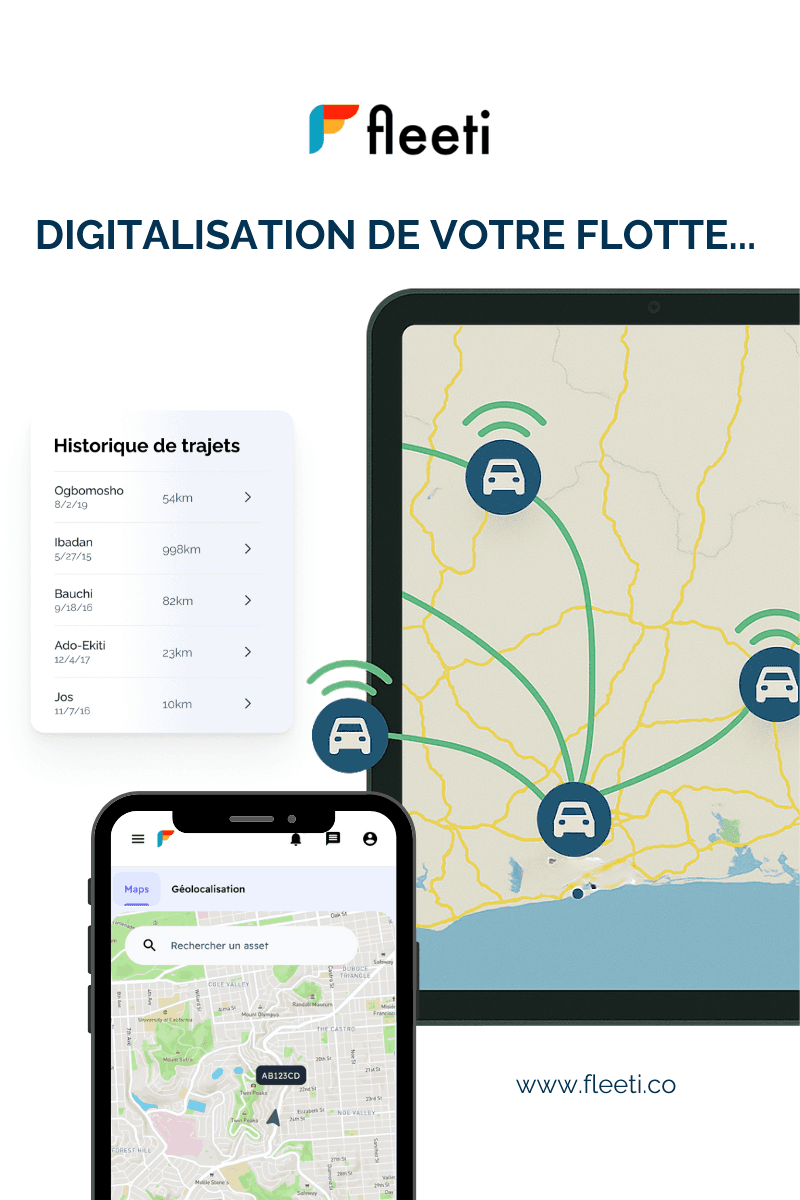



Faced with rising costs, increasing safety requirements and the need for real-time visibility, fleet managers must now rely on reliable digital tools to run their vehicle fleet efficiently.
But successfully digitalising a fleet is more than installing a GPS device. It is a structured, gradual, use-focused approach. At Fleeti, we support companies in France and Africa through this transformation, close to the realities on the ground.
Why fleet digitalisation has become unavoidable
Traditional fleet management, based on manual declarations or partial data, quickly reaches its limits. Without reliable data, it becomes hard to control costs, anticipate incidents or keep drivers safe.
Fleet digitalisation gives access to real-time vehicle data, coming from a GPS tracking system, and turns this information into levers of operational performance. It offers an objective view of field activity and makes day-to-day decisions easier.
Step 1: set clear fleet management objectives
The first step of a digitalisation project is to clarify the objectives. Every fleet has its own issues. Some want to cut fuel costs, others to improve driver safety or to strengthen visibility over multi-site operations.
Identifying these priorities makes it possible to choose a fleet management solution that is genuinely suited to your needs. Digitalisation has value only if it addresses the concrete problems faced by the fleet manager and field teams.
Step 2: rely on a reliable GPS tracking system
The GPS vehicle tracking is the foundation of any digitalised fleet. It makes it possible to locate vehicles in real time, analyse journeys, understand usage and anticipate the unexpected.
Companies have a vehicle tracking system designed to work in complex operating environments, in France as in Africa. Data reliability is essential to build trust and allow precise fleet management.
Step 3: centralise and use vehicle data
Collecting data is not enough. The value of digitalisation rests on the ability to centralise and use this information. A digital fleet management platform makes it possible to bring all vehicle data together in a single tool, accessible to fleet managers and decision-makers.
Data then becomes a basis for analysis to track key indicators, compare usage between vehicles or sites, and measure the impact of the actions put in place. This approach turns fleet management into fact-based steering.
Step 4: build safety into the heart of digitalisation
Fleet digitalisation plays a major role in improving safety in the field. Analysis of driving behaviour, real-time alerts and prevention tools make it possible to reduce risks and support drivers in a constructive way.
With solutions like Fleeti Vision, video telematics complements GPS tracking to better understand risk situations and put targeted actions in place. Safety then becomes a lever for lasting performance, not a constraint.
Step 5: support teams over the long term
The success of a digitalisation project rests as much on technology as on team buy-in. Training fleet managers, raising driver awareness and supporting change are key elements.
At Fleeti, we favour a partnership approach, based on listening and long-term support. Fleet digitalisation is an evolving process, which adapts to the realities of the field and the company’s objectives.
Fleet digitalisation: a lever for long-term performance
A digitalised fleet makes it possible to control costs better, improve vehicle availability, strengthen safety and optimise field operations. By relying on reliable, usable data, companies move from reactive management to proactive, controlled fleet management.
In 2026, fleet digitalisation is no longer an option. It is a competitive advantage for companies that want to run their operations with clarity and peace of mind.
Conclusion
Successfully digitalising a fleet rests on a structured approach, centred on uses and supported by suitable tools. By combining GPS tracking, vehicle data and field expertise, Fleeti supports companies towards fleet management that is more efficient, safer and more sustainable.
Digitalisation becomes a strategic lever when the technology is designed for the field.
🔗 Discover Fleeti’s fleet management solutions: https://www.fleeti.co


